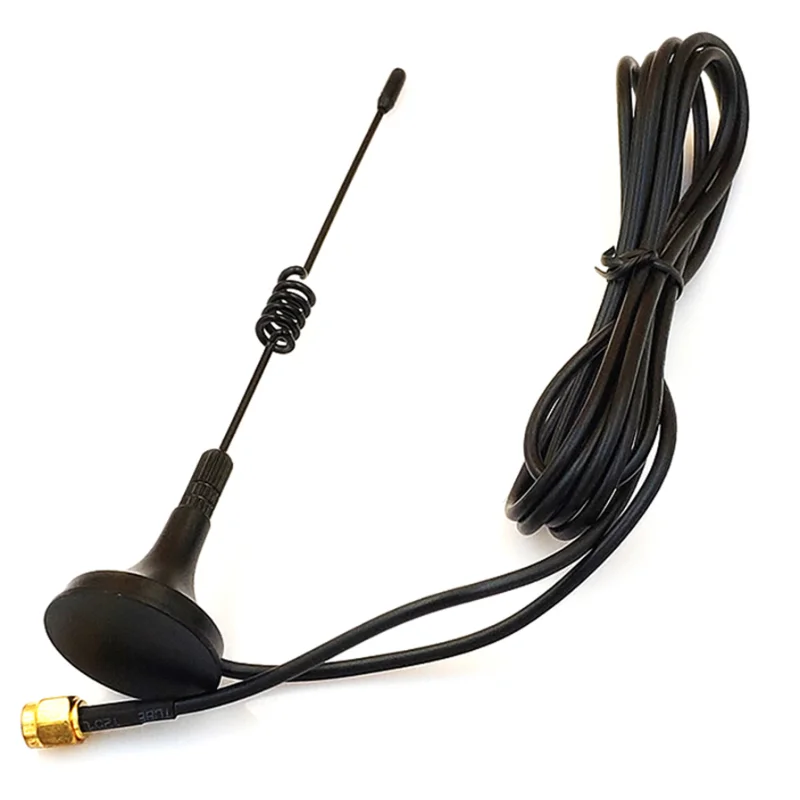
High-Gain Performance (7-15 dBi): Antennas in this category typically offer a gain between 7 dBi and 15 dBi to significantly amplify weak 4G/LTE signals from distant cell towers . This helps improve download/upload speeds and connection stability in rural or building-shielded areas.
Low-Loss Coaxial Cable (Critical for 10m Length): Because standard cables (like RG58 or RG174) lose significant signal over 10 meters, these antennas usually come with low-loss cable types like LMR195, LMR400, or KMR240. This is essential to ensure the high gain of the antenna actually reaches your router without being negated by cable loss .
Weatherproof & Outdoor Design (IP65/IP67): Designed for permanent external mounting, they feature IP65 or IP67 ratings for waterproof and dustproof performance . Materials are usually UV-resistant ABS plastic or fiberglass to withstand harsh weather .
Wide Multi-Band Frequency Support: Most modern 4G antennas support a broad range from 698-960 MHz and 1710-2700 MHz (and sometimes up to 3800 MHz for 5G) . This ensures compatibility with all major LTE bands used by operators (e.g., 800, 1800, 2600 MHz).
Versatile Mounting & Connectors: They typically include pole or wall mounting brackets for flexible installation . The connector is usually an SMA male or N-type, often with adapters (TS9/CRC9) provided to fit various routers and modems .
Antenna Type (Directional vs. Omnidirectional):
Directional (Yagi/Panel): Must be aimed at the cell tower; offers higher gain and better focus .
Omnidirectional: Receives signal from all directions (360°), easier to install but typically with slightly lower gain .